

The 3rd Annual festival of all things film and AI was expertly curated and useful in this tough moment for AI and creativity.

The beautiful Culver Theater in Culver City, CA
I've been a member of Artificial Intelligence Los Angeles (AI LA) for almost 10 years. This community of innovators and builders is the work of Todd Terrazas, a stand-up guy and perhaps the most connected AI person in Southern California. AI LA has consistently curated useful and interesting sessions all over Southern California. Todd's part of the reason we have as many tech companies enabled for AI literacy and such good relationships with media entertainment companies. His most recent event, AI on the Lot 2025 occurred in historic downtown Culver City, CA, in the heart of SoCal Screenland. A colorful and exceptional group of creators, artisans, and technologists gathered for education, conversation, and collaboration at the Culver Theater and the nearby studio space of Culver Labs.
Over two and a half days, the event provided a fascinating glimpse into the future of AI in filmmaking and content creation. The entertainment industry is grappling with the rapid advancement of artificial intelligence, which means huge disruption must be managed and assimilated. Of the many takeaways, here are five from my event experience:
The Rise of AI-Centric Studios vs. AI Integration into Traditional Filmmaking. A new breed of content creators is emerging and positioning themselves as the future of the studio system. These innovators are using AI for all aspects of production, sometimes starting with nothing more than a text prompt - not even a script (this writer says with concern). While this approach offers unprecedented speed and efficiency, it raises questions about the depth and quality of the resulting content. One speaker noted that AI is giving us “art at the speed of thought”, although I’m not sure I really want to see art that comes from a random moment in the transom of someone’s mind.
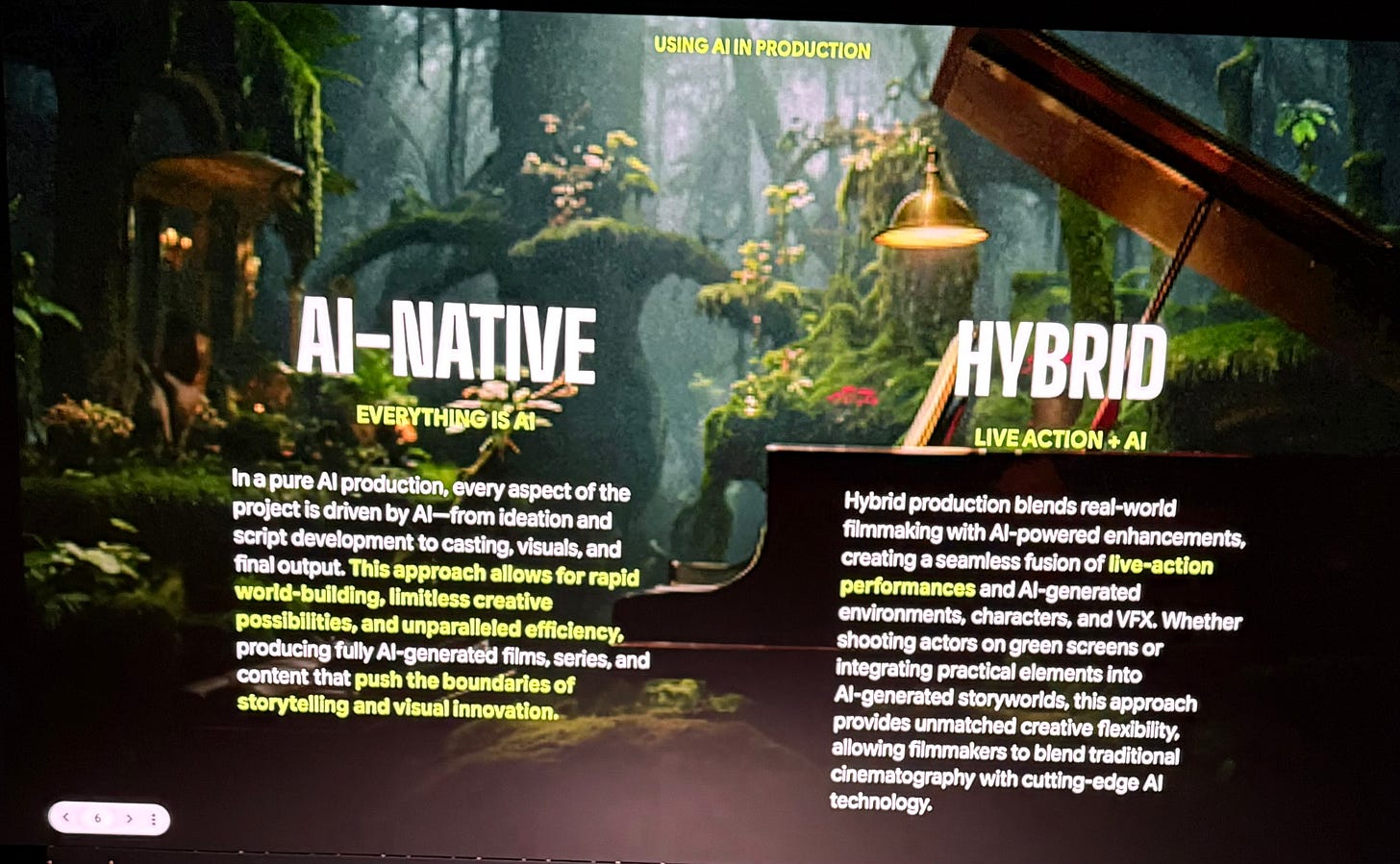
For traditional filmmakers, we're seeing a more nuanced integration of AI into specific components of traditional filmmaking, rather than a complete AI takeover. Major studios are likely to adopt this approach, using AI to cut costs and enhance certain aspects of production while maintaining the core elements of traditional filmmaking. In fact, I spoke with leaders at a couple of studios about how Credtent’s ethical AI tools can enable them to embrace AI in production without harming their IP or abusing the work of others.
The Quality Conundrum and the Value of Collaboration
Many of the AI-generated films screened at the event would be described by many as “AI slop”, a term derided on stage by Jason Zada of Secret Level, whose short AI-generared film The Heist has garnered praise and consternation. When he debuted his new short The Heist2, he apologized for, “having made it with Google’s new Veo 3 in only two days”. The tone of that statement was one of exhilaration, not contrition.
What followed was a dizzying short where an unnamed driver with a mustache and a smile got into a car and tried to evade a grumpy, uncanny valley thug master who kept yelling at his drivers to ‘get him.’ The effect was like watching a snippet of a film that would be called a ‘set piece’, but lacking the grandeur of the impressive real-world feel you might get if you go to the theater this weekend to watch Tom Cruise in the final Mission Impossible film.
These AI artisans noted that a lot of prompting and reprompting was involved in the creation of their work and they want recognition for AI work as an art form. This may still be challenging while AI generations lack consistent imagery and the rushing and racing around offering little in the way of story or any stakes that matter.
I observed many in the audience looking at their phones during the AI movie viewings. Simply put, some people are going to enjoy creations of this kind of entertainment created with AI, but whether or not this algorithmic content finds an audience that is interested in committing the time, attention, and (potentially) the money to view it on their own is an entirely different question. This highlights the ongoing challenge of creating high-quality, engaging content using AI tools alone.For me, AI on the Lot reinforced the importance and the value of collaborative filmmaking. While AI can assist in various aspects of production, the synergy of diverse human talents at the top of their game remains vital to creating interesting original work, as opposed to accepting the algorithmic average of what has come before. One need only look to another standout AI film that we also saw, A Love Letter to LA, featured the exclusive art of Paul Flores, music from Cuco, and under the guidance of AI-enabled director Paul Trillo, this film used a ‘clean LLM’ (more on that below), and employed a team of experts to put it together. These artisans were given the chance to ‘extend’ their work with AI, not get replaced by it. The end result speaks for itself — this is some cool art (Full Disclosure: I’m an L.A. native and I love my hometown).
I believe one key reason that film is such a thrilling format is because of the collective of people involved in creating a work of art that is a deeply human collaboration. Filmmaking means bringing in people with immense talent in specific spaces to contribute to the creation of the grand vision brought together by the writer, director, and producer. You can see that in action in the impressive short above.This is an opportunity for them to collaborate with the actors, the production designers, the cinematographers, and all the people who are part of the experience of putting a film together. And, how often does it result in something grand that you can feel the collective fingerprints of hundreds of people when watching a film. I wonder if we're just missing out on something fairly essential to film by having one person at a computer with a prompt engine and their solo creative instincts. We’ll see how this all unfolds.
Ethical AI and Content Creation Platforms
Another important session was a preview by Asteria, a film organization using Marey, a platform developed by Moon Valley AI. They are pioneering ethical AI in video production by using only licensed content for training. Their approach addresses concerns about the unauthorized use of artists' work in AI training data effectively. We’re delighted to see them proving that you can make an amazing model without stomping on copyrighted material to advance the technology. Learn more about the way this film was created below.
We all know that AI companies have licensed material from Newscorp, the AP, Vox Media, The Atlantic, and now, the New York Times has officially licensed their work to Amazon’s AI team. This growing list of licensing deals should put to bed the idea that “Fair Use” is an appropriate defense for appropriating the work of others. If that were true, why would they license from the biggest names in content? We just need to make sure every creator is treated the same way, not only those with the funds to launch a lawsuit against Big AI.
Copyright in the Age of AIThe AI on the Lot event has indeed sparked a fascinating dialogue about the intersection of artificial intelligence and creative industries, particularly in the realm of copyright law. The case study of the animated partial-AI film Critterz serves as a compelling example of how AI-assisted work is pushing the boundaries of traditional copyright norms. This film, based on a five-minute short but now penned by the writers of the 2024 release Paddington in Peru, was largely brought to life through AI technologies. Critterz represents a new frontier in content creation that challenges our conventional understanding of authorship and creative ownership.

The jump in quality from DALL-E 2 to SORA is profound.
Critterz has also succeeded in securing copyright protection, which highlights the evolving nature of intellectual property rights. It suggests that in the Age of AI there may be a path forward for creators who wish to incorporate AI tools into their workflows while still retaining legal ownership of their work. This development is likely to encourage further experimentation and innovation in the film industry and beyond.The proposition that refined AI prompting could lead to copyrightable work is particularly intriguing. It suggests that the level of human input and creative direction in guiding AI systems may be a key factor in determining copyright eligibility. It also aligns with the traditional emphasis on human efforts in creativity in copyright law, while acknowledging the role of AI as a sophisticated tool rather than an autonomous creator.Credtent's efforts to develop AI transparency tools are crucial in this emerging landscape. By providing a means to analyze and quantify the degree of AI involvement in a work, Credtent provides a valuable service to creators and the industry at large. This transparency not only aids in copyright considerations but also contributes to broader discussions about ethics and authenticity in AI-assisted art.
The notion of "artistic specificity" in AI-generated content introduces a nuanced perspective on what counts as authorship. It suggests that the unique combination of prompts, tools, and iterations used by a creator could qualify as a form of artistic expression (potentially) worthy of copyright protection. This concept will challenge us to reconsider what it means to be an author in the digital age, where the line between human and machine creativity is increasingly blurred.However, it's important to note that these developments also raise complex questions. How much human input is necessary for a work to be considered the product of human authorship? How do we balance the rights of AI developers with those of content creators who use their tools? These are issues that the copyright office, legal experts, and creative industries will need to grapple with, clarify, and resolve in the coming years.The role of Credtent in this evolving landscape cannot be overstated. By providing tools for AI transparency, Credtent is not only helping creators navigate the current copyright landscape but also potentially shaping future policy and industry standards.

Free AI Transparency Badges available at credtent.org
The partnerships we're discussing with the film industry could help to establish best practices for AI-assisted content creation that respects both innovation and intellectual property rights. Audience want to know if a film used AI in its creation. These disclosures will be vital to getting an audience to the theater or even the streaming screen. Even now, beloved Hollywood actress Natasha Lyonne is facing a backlash for her AI-assisted film that is being done in cooperation with Asteria Studios. As she’s said, we need a more nuanced view of AI than “all AI is bad and it cannot be used in art.”
The Generation Gap in AI EthicsPerspectives on AI-generated content and copyright issues expressed by younger creators throughout the week were both insightful and thought-provoking. The generational shift in attitudes towards AI tools and ethical concerns (particularly with Gen Alpha) could indeed have far-reaching implications on intellectual property rights and the future of creative industries.Quicker acceptance and adoption of AI tools by younger creators stems from a logical question: why would these tools be available if they are unethical? This perspective reflects a generation that has grown up in a native digital world where technological advancements are the norm. However, it also illustrates a crucial disconnect between the rapid pace of technological development and the slower evolution of ethical and legal frameworks.

Asteria Studios at The Culver Labs
Younger creators questioning societal structures that fail to respect creators and exploit consequential artists is a powerful indictment of our systems. Their concern about using tools that may not align with established legal and ethical norms shows a keen awareness of the complexities surrounding AI-generated content. Continued awareness with advocacy efforts could potentially drive future changes in how we approach copyright, attribution, and fair compensation in the creative industries that (for now) power millions of jobs in the US and abroad.A call for ethical frameworks and transparency tools echoed throughout the creative community all week. Discussions between learning sessions and keynotes were often about the need for platforms that can verify the ethical sourcing of AI-generated content and assist in copyright applications. It was encouraging for me that everyone who heard about Credtent’s dual mission was receptive and supportive.
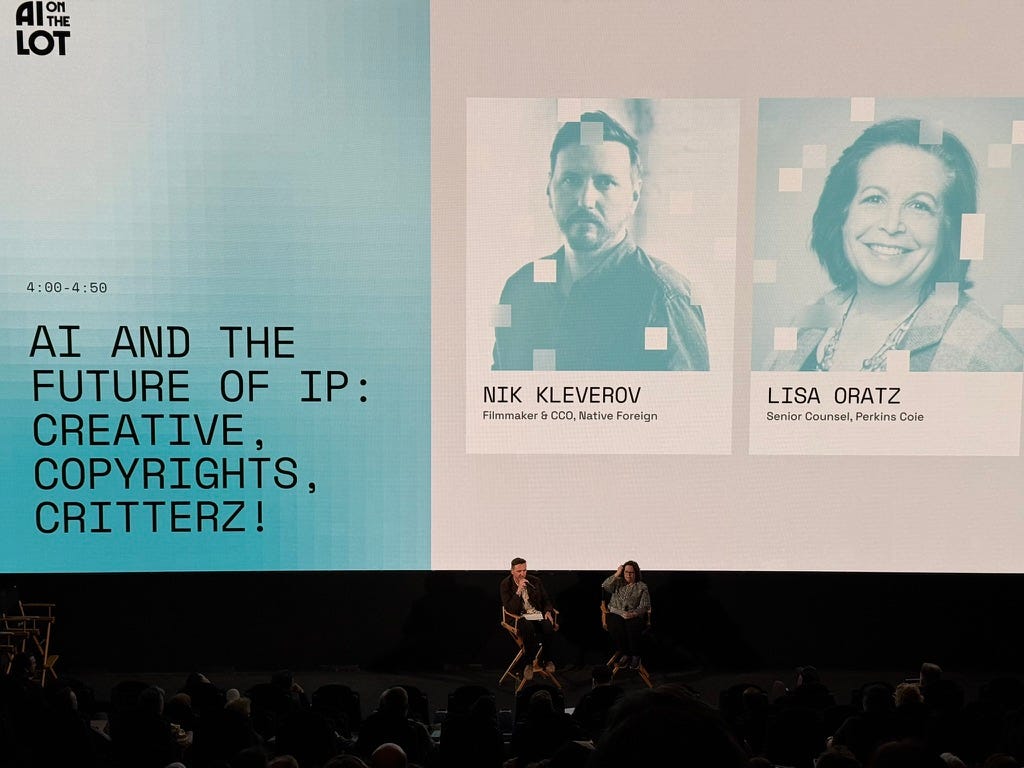
Perkin Coie Senior Counsel Lisa Oratz called for collective licensing solutions like Credtent.org. I was happy to hand her a card after her session.
There were repeated calls for a collective licensing solution during the event, underscoring the industry's recognition of the need for a balanced approach. Credtent's positioning as the middle-ground solution addresses this need directly and resonated with all the creators, attorneys, and studio folks with whom I spoke about it. Our approach resolves the ongoing tension between protecting creators' rights and embracing technological advancements (currently with little governance and accountability). We are working to ensure that creative individuals can thrive in the Age of AI while fostering future innovation with ethical foresight.We like the concept of Collaborithmic Creativity so much that it’s the name of our upcoming anthology of essays and fiction on the subject. We envision a future where human creativity is enhanced by ethically sourced AI tools, leading to unprecedented levels of innovation and artistic expression. This symbiosis between human ingenuity and AI capabilities could transform the creative landscape, allowing creators to push boundaries without the burden of ethical concerns regarding the exploitation of others' work.The idea of creators working with AI companions sourced from allowed libraries of work addresses one of the key ethical concerns surrounding AI-generated content. By ensuring that the data used to train these AI systems is properly licensed and attributed, we can create a more equitable ecosystem that respects the contributions of all creators, past and present.This is the vision of Credtent and, with each company or creator that signs up for our platform, its reality becomes more likely.A Powerful Session for 2025The AI on the Lot 2025 event was a vibrant tapestry of ideas, innovations, and impassioned discussions that painted a vivid picture of the future of entertainment. The palpable enthusiasm of the attendees, from seasoned industry veterans to wide-eyed newcomers, created an electric atmosphere that crackled with possibility.This event underscored the critical importance of maintaining the human element in storytelling, even as AI tools become more sophisticated. The magic of cinema, after all, lies in its ability to touch the human soul, to evoke emotions, and to tell stories that resonate on a deeply personal level. As one attendee remarked, "AI can help us paint the canvas, but the human heart still chooses the colors."The show also reinforced the crucial role that platforms like Credtent will play in this new landscape. I certainly appreciated the positive response to Credtent's offerings that highlighted the industry's hunger for solutions that can navigate the complex intersection of creativity, technology, and ethics. The consensus seemed to be that by working together - creators, technologists, legal experts, and ethicists - the industry can forge a path forward that honors the art of storytelling while embracing the transformative power of AI.
Burgessing on Content, Board Games and Other Things is a reader-supported publication. To receive new posts and support my work, consider becoming a free or paid subscriber.
About the Author

E.R. Burgess
Contributor on AI, ethics, and creator rights.